Background
What I've done so far and why
This first post is meant to give some insight into myself and my work at ORBIT — a humanoid robot designed specifically for deployment in microgravity.
Before ORBIT
I started my degree in mechanical engineering in 2023. I had finished high school and was working as a waiter before that, and I didn’t really have any expectations of what the course would be like. I chose it on a whim, because it’s what my friends were doing.
In the first semester I refused to conform to how one is supposed to approach a hard degree, and wanted to do it my own way. That almost failed catastrophically, so I adjusted. I decided I had to become obsessed with the course — not necessarily with the theory, but with what I could do with it.
After passing the first year I joined a student team as a thermal testing engineer on a CubeSat project. The two biggest things I took from it: you can just start doing things with zero experience, and large organisations are hard to work in. For something to go right you need maximum ownership over your task and its results. I wanted more responsibility over the outcome, not to be a footnote.
So I applied to a focus project. Every year a small team of students is handed a hard problem to tackle. The one I went all in on was ORBIT — a humanoid robot for space deployment.
ORBIT — shattering expectations
Anyone at ORBIT can tell you the first thing we agreed on was to shatter expectations and shoot for the stars. None of us had any proper experience building robots, so we decided to just rush everything. We were ordering parts, designing, and printing prototypes within the first few weeks.
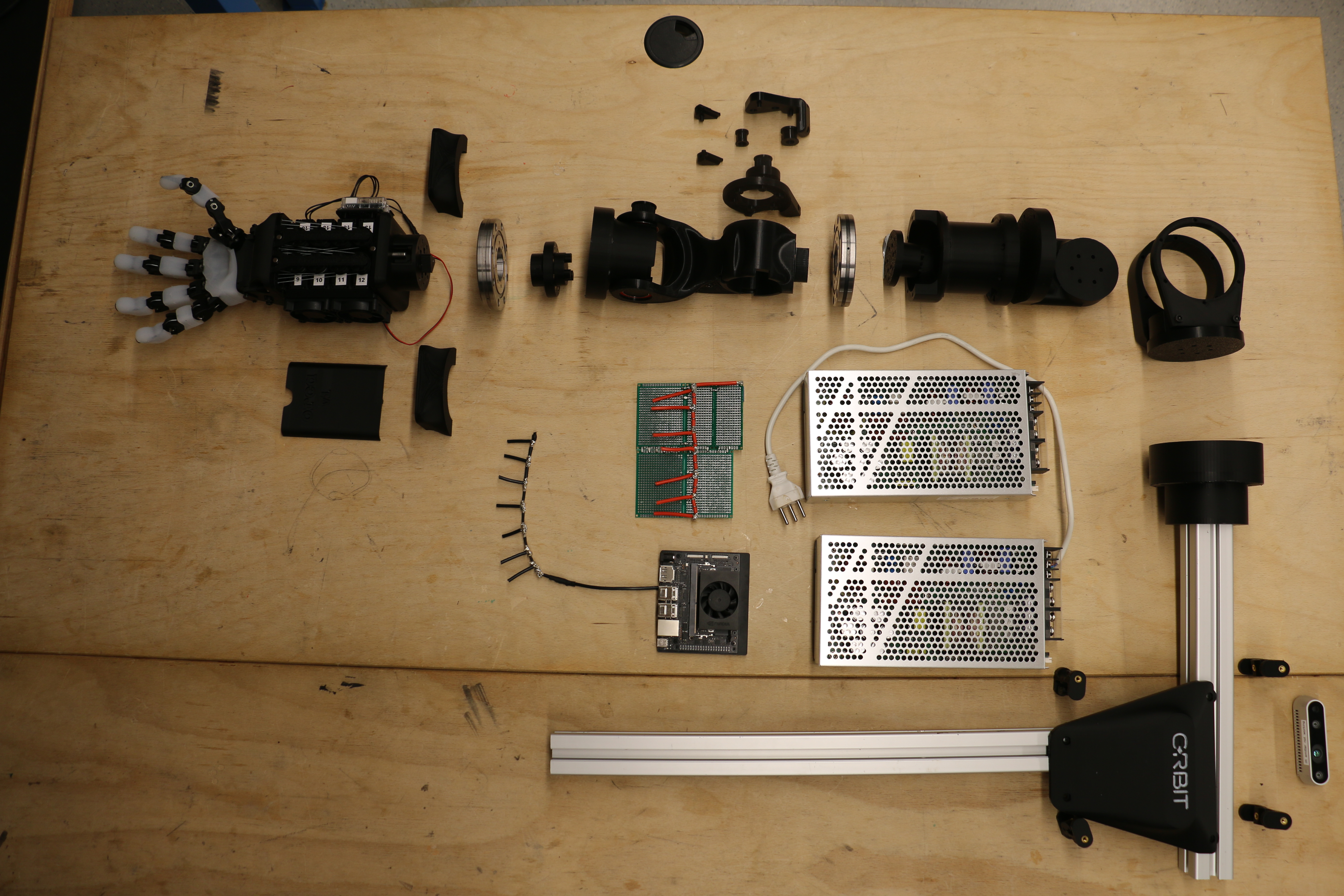
I was one of the mechanical designers. Levi Keller and I worked on the arm — he’s an exceptional engineer and I learned a lot from him. I was terrified of printing my first part, because I was worried it wouldn’t work. In hindsight that’s a stupid thing to worry about, since first drafts never work, but I hadn’t realised that yet. Once I started printing parts I already knew were flawed, I began iterating far faster, and getting working systems from design into reality quickly.
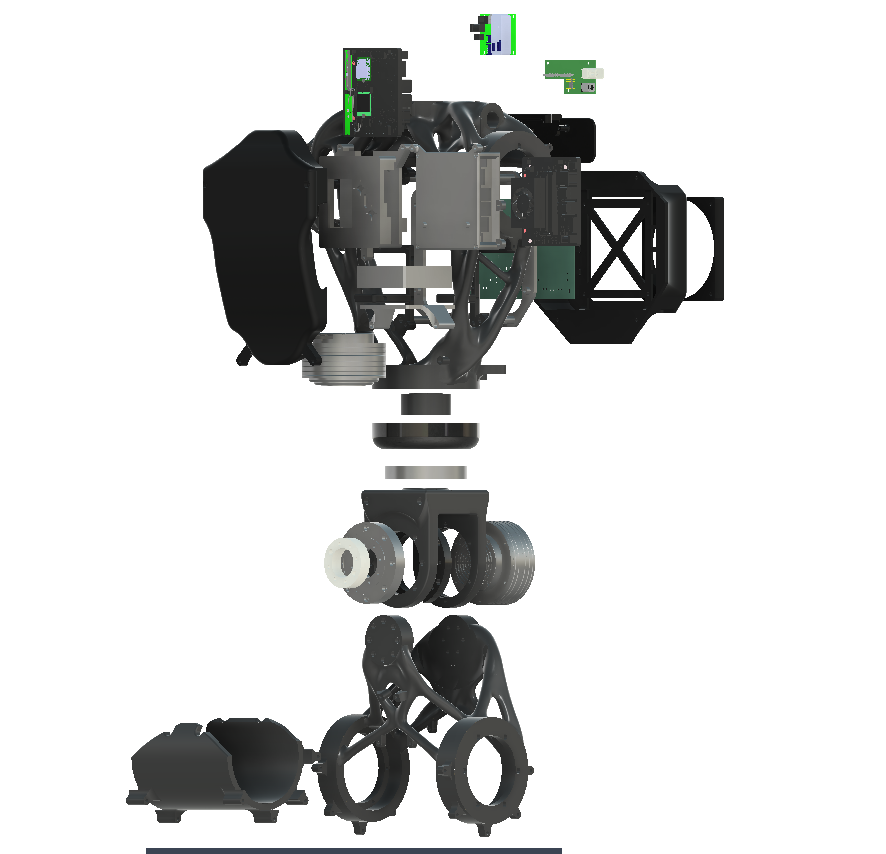
As the project progressed, so did its scope. I ended up with ownership of the torso and hip of our four-armed humanoid space robot. I started using topology optimisation for the load-bearing structures, and I really like how the parts came out — how organic they look.
In the last month we put the pedal to the metal. Integrating every system into the torso and housing all the components was an enormous time sink. The only way we got it working was by being relentless: showing up all day, every day, without compromise.
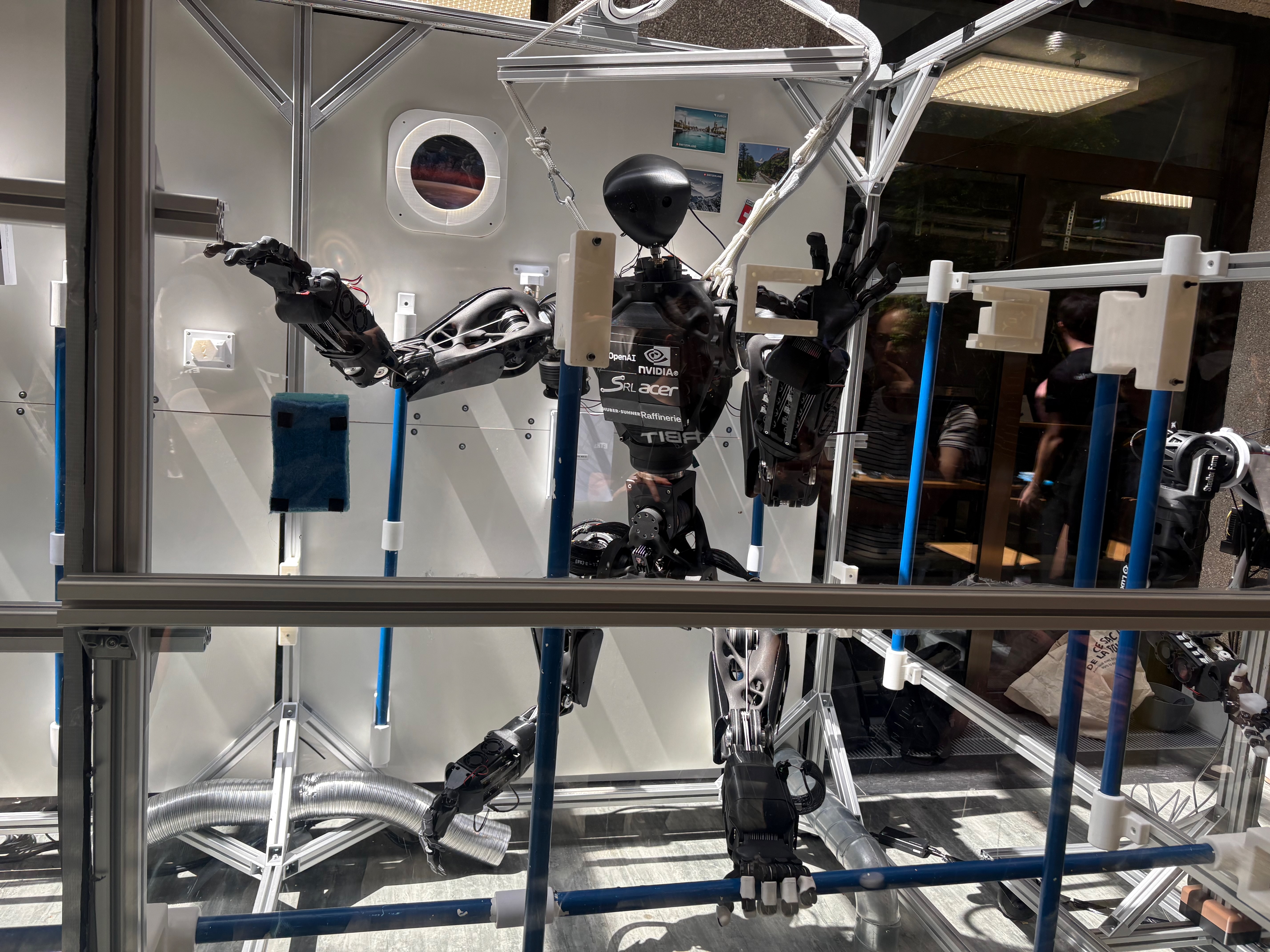
Further orbits
Having shattered those expectations, I now want to supersede my own and maximise my growth here at ETH. I want our robot to walk on its own two legs. So that’s what I’m doing now, hybrid, tendon driven humanoid robot legs.